Continuing ResearchOps
ResearchOps
Kate Towsey at UX Brighton 2018
About this talk
In March 2018, the ResearchOps Community was formed with the intention of validating and shaping the practice of ResearchOps. Since then, the Community Slack has grown to 1000+ members and many more are part of the conversation in person or on Twitter.
Core to the Community has been a global research initiative called #WhatisResearchOps. A team of 60 researchers have worked together to run 32 workshops around the world to ask researchers about their challenges and triumphs, and their expectations of ResearchOps. To make sure we reached people who couldn’t get to a workshop, we also ran a survey. In total, more than 800 people have taken part in the initiative.
In this talk, Kate shared the background to the Community, what they’ve learned from #WhatisResearchOps, and the first iteration of the framework. Kate spoke on behalf of TeamReOps: all the organisers and thinkers from around the world who’ve donated countless hours to the effort and are making ResearchOps what it is today.
Methods mentioned
- Workshop Facilitation14:59Runs a series of global ResearchOps workshops using Liberating Structures so every participant can contribute.
- Insight Synthesis19:30Affinity-groups workshop contributions into common themes that become the ResearchOps framework.
- Surveys21:42Runs a follow-up survey answered by hundreds of researchers to check and extend the workshop findings.
- Participant Recruitment29:31Treats finding participants, panels, incentives and thanking respondents as a core ResearchOps workstream.
- Research Repository31:49Argues for repositories so reports, recordings and decision evidence are not lost after projects end.
Related reading
Books, research, ideas and people referenced in this talk.
Ad · Book titles link to Amazon. As an Amazon Associate I earn from qualifying purchases.
Papers and articles
- ResearchOps Community: a series of global workshops15:37The announcement for the worldwide workshop programme used to research and define ResearchOps.
- A framework for #WhatisResearchOps22:53Kate Towsey's written account of the definition, evidence and first framework presented in the talk.
Concepts
- ResearchOps00:29The community's current definition and eight-pillar model of the practice introduced here.
- 1-2-4-All18:47The Liberating Structure used to involve everyone in the global workshops.
- Affinity diagrams19:30Affinity grouping turned participants' workshop contributions into common themes.
- Knowledge management31:16Knowledge capture, maintenance and retrieval are presented as a specialist ResearchOps responsibility.
- Research repositories31:49Repositories address the problem of lost reports, recordings and decision evidence.
- Information architecture33:48Structuring research knowledge benefits from trained information architects or librarians.
- Servant leadership27:21Servant leadership appeared in the workshop data as a possible model for research leadership.
- Finding participants for user research29:31Recruitment, panels, incentives and thanking respondents form a substantial operational workstream.
- Creative Commons Attribution-ShareAlike18:03The community allowed others to reuse and extend its outputs with attribution and the same licence.
People
- Emma Boulton21:49Boulton drove the survey analysis and later developed the Eight Pillars interpretation.
- Brigette Metzler25:50Metzler transformed workshop responses into the Kumu network map that inspired the framework.
Projects and resources
- The ResearchOps Community03:17The volunteer community behind the organisers, workshops, analysis and open outputs.
- What is ResearchOps - Kumu map25:50The public interactive network map of workshop data demonstrated on stage.
- Aurelius24:34The shared analysis platform used to organise the workshop datasets and derived insights.
- Mural28:01Used to turn the Kumu analysis into a printable, editable ResearchOps framework.
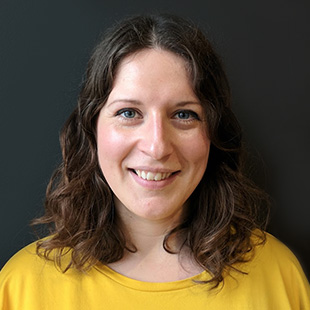
About Kate
Kate believes that in order for research to be truly valuable, it must be done thoroughly, professionally, and securely. She creates labs, panels and archives that are carefully designed to meet demanding specifications, sometimes assembled with minimal resources, but never compromising quality.
Working freelance, Kate refuses to fit neatly within job titles. Instead, she takes an entrepreneurial approach to her work with government, agencies, universities, broadcasters and others. The BBC and Co-Op are the current beneficiaries of Kate’s exacting approach.